
This article is by Bertus de Jong, and was first published on his substack (@outsidethecircle) here. It is the first in a three-part series on the European summer of T20 franchise cricket.
“You wait ages for a European T20 franchise league, and then three come along at once.”
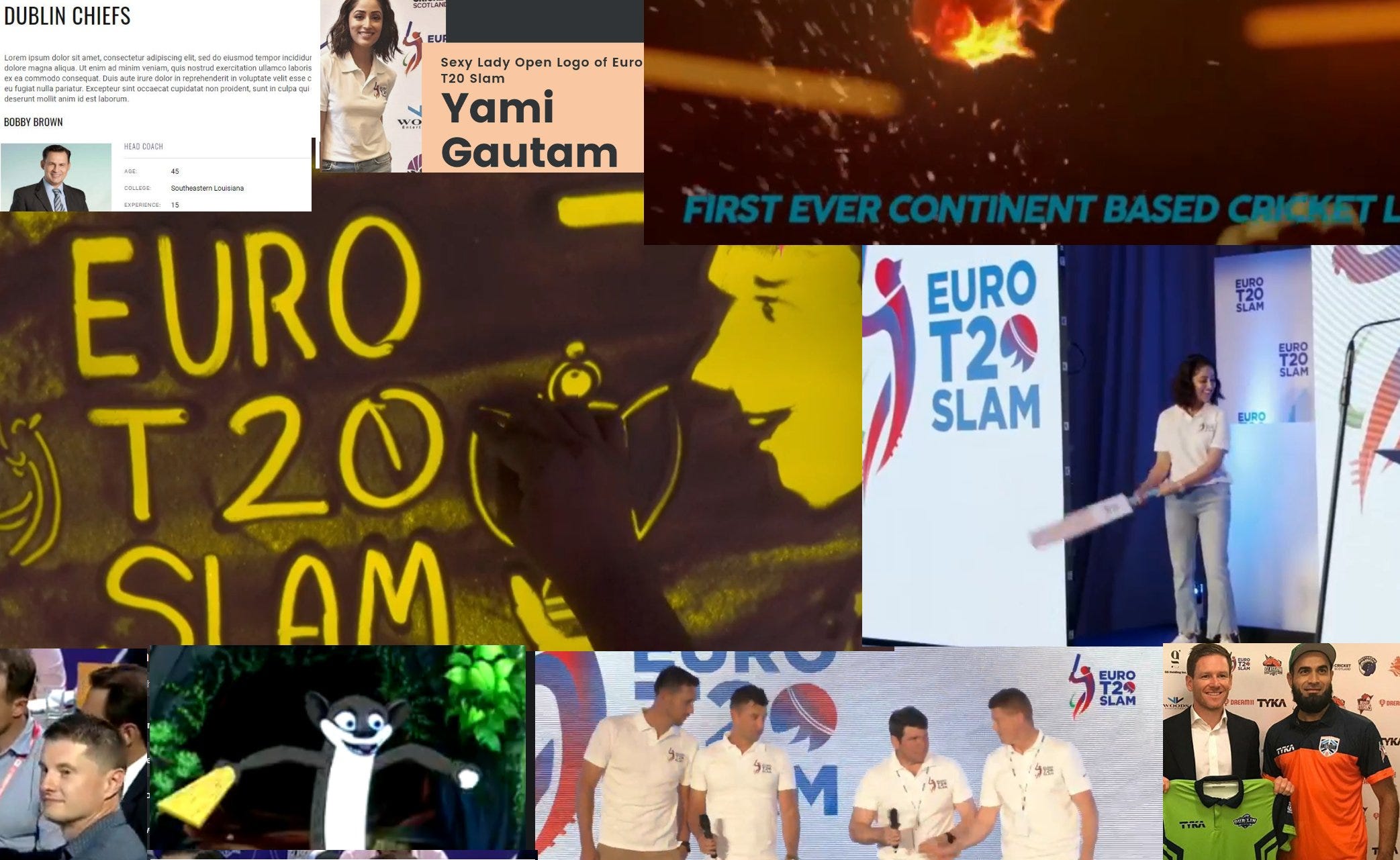
It’s been the better part of six years since Cricket Ireland, Cricket Scotland and the KNCB (aka Cricket Netherlands) collectively announced their intention to stage the Euro T20 Slam, a six-team franchise league to be hosted across the three countries. Yet in the end the tournament never materialised, amounting to nothing but a long-forgotten launch ceremony and a little-remembered draft event, and after a string of postponements the concept seemed to have died a quiet death.
No longer.
The three boards are back with new backers and a new brand. The European T20 Premier League was initially slated to launch last year before the Hundred’s initial opening to outside investment forced yet another postponement, but it is all but certain to finally get off the ground this season. Waggishly labelled the “Son of Slam” by some, the ETPL is backed by serious money, with Bollywood’s Abhishek Bachchan taking a stake in the league, and has seen franchises snapped up by big names in the game. Team owners in the league now include Steve Waugh, Nathan McCullum, Glenn Maxwell, Rahul Dravid and Ravi Ashwin. Five of the six franchises have been sold for the first season, and pre-signed players include Steve Smith, Mitch Marsh, Tim David and Mitchell Santner, With a player-draft set for early next month, and a window booked for August, the long-awaited European franchise league looks set to finally launch this summer.
Yet now it looks like they may be beaten to the punch.
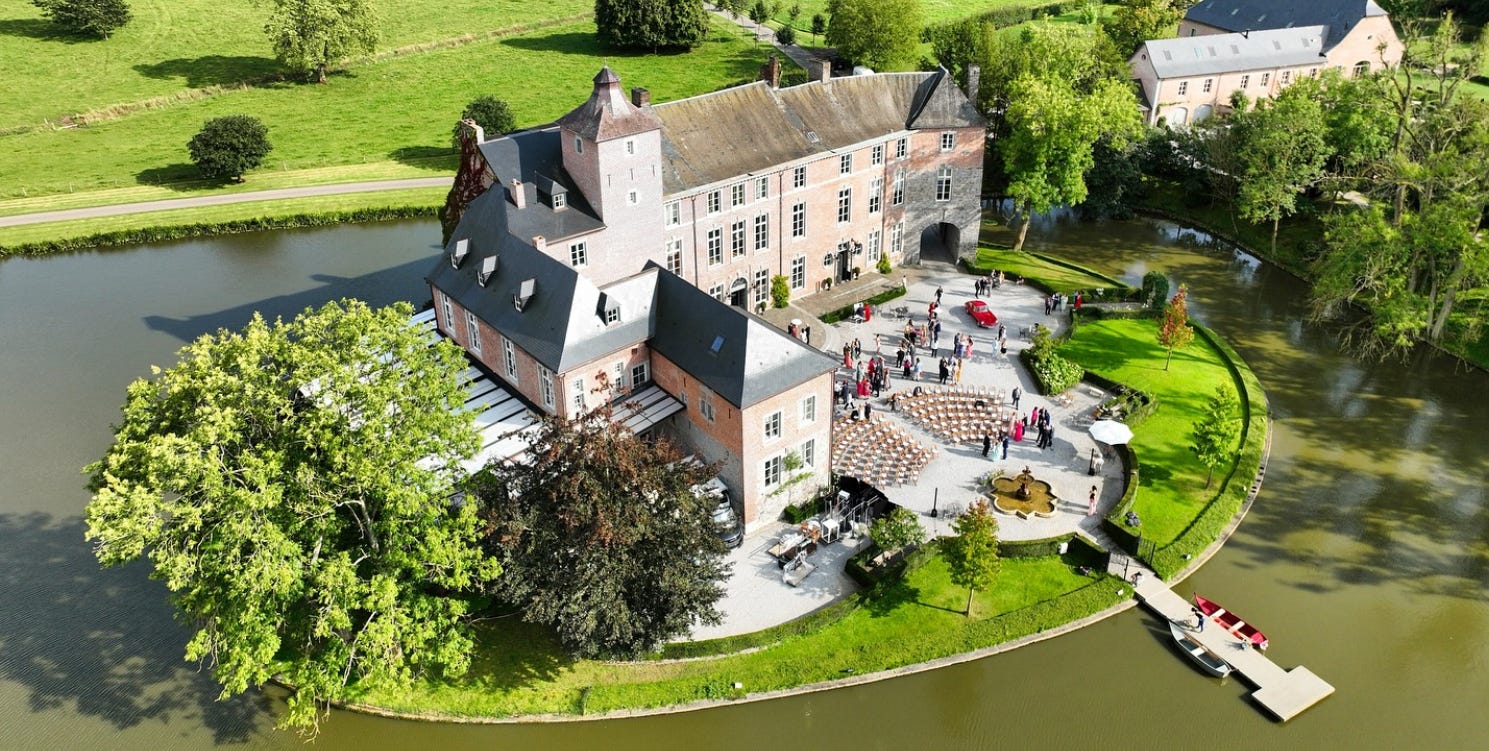
At least two more franchise competitions are set to debut on the continent this summer, one in Belgium and then a second in Sweden, both gazumping the ETPL by several weeks. Buzz around the EUT20 Belgium, set to commence this weekend, has been building for months – generated by a string of high-profile signing announcements on social media and culminating two months ago at the picturesque Chateau Brayard in the Ardennes with a glitzy draft ceremony attended by league ambassador Eoin Morgan along with team coaches Herschelle Gibbs, Jonathan Trott, Donovan Miller and Shivnarine Chanderpaul and compèred by Niall O’Brien. As it stands the five-team tournament, running from the 6th to the 14th of June at Hofstade, is set to feature the likes of Andre Russell, Shakib Al Hasan, Temba Bavuma, Faf du Plessis, Martin Guptill, Rassie van der Dussen along with a host of other Full Member and Associate talent that could well eclipse any league outside of a the test-playing nations.
To the North, Cricket Sweden have announced their own foray into franchise cricket with the Nordic Smash T20, set to take place at Norsborg in the third week of June, hot on the heels of the EUT20, and followed by a three-team women’s competition later in the summer. Their behind-closed-doors draft back in April was rather more low-key affair and the rosters comparatively modest in terms of star power, but still saw Shakib Al Hasan (also on board for the EUT20) sign up to extend his European tour, with remaining overseas slots largely filled out by European Associate talent – the Netherlands’ Noah Croes and Scotland’s Tom Bruce among the more notable names.
European cricket fans have grown understandably sceptical of such announcements of course, the EuroSlam is not the only attempted franchise project to have promised much and delivered nothing on the continent, and may it not be the last. Questions remain about the viability and sustainability of all three new leagues, but with coaches and players already arriving at Brussels this week, it’s clear that something is at least finally happening. After half a decade of disappointment, the first ball of genuine European franchise cricket is scheduled to be bowled tomorrow in, of all places, Hofstade, Belgium. How, one might well ask, did that happen?
The EUT20 is principally the vision of Indian entrepreneurs Vedika Thakur and Robin Chaudhary of the recently-incorporated Destino Legends LLC rather than Cricket Belgium, having its genesis in initial discussions early last year when representatives of Destino approached the Belgian board with a proposal. “They got in touch with us via some of our Indian contacts, who come to do coaching at some of the clubs here in the Antwerp region” explained BCF vice chair Rohan Ravindran, “they told us about some people who were interested in getting a league to Belgium, so we said okay why don’t you pass on my contact and the chairman [Umair Butt]’s contact, and they got in touch with us. It took some time for us to do the due diligence and get the ICC’s blessing, and we took it from there.”
“We were looking at a lot of European nations” a spokesman for Destino elaborates “there will be news in the future of us signing with other European nations as well. We started off with Belgium as we felt it has the cricket facilities and the diaspora of South Asians – so interest in cricket is quite high … which gives us the advantage of developing from the grassroots, and their current environment suits us.” Thakur and Chaudhary are looking to hit the ground running, with an expected outlay of some $2.5 million for the first season, and are bullish about returns. “In terms of predictions for the revenues from sponsors we expect to break even in year one” Destino’s spokesman says, and they’ve succeeded in selling five franchises off the bat (dialled back from an initially planned six, for competitive rather than commercial reasons) despite a rumoured price tag of upwards of a half million per team.
Among those picking up teams are Nepali outfit Dream Sports (owners of the Janakpur Bolts in the Nepal Premier League) who took the Bruges franchise, while former India international Zaheer Khan is co-owner of the Antwerp Anchors together with the Stockholm-based Anchor Sports. Boasting a player salary cap of a quarter million per franchise for a nine day competition, the league has attracted a glittering roster of talent despite restrictions on player participation placed on new competitions such as the EUT20.
Since March of last year of new rules on start-up leagues, short format (i.e. 20 overs or fewer) competitions directly sanctioned by national boards such as the BCF are limited to four current full member internationals across the entire event (defined as players to have appeared for a full member in official internationals in the preceding 24 months). Competitions seeking to exceed that allowance are obliged to seek an explicit No Objection Certificate from the ICC, which would entail a greater degree of direct oversight (and which the ICC has been reluctant to extend, even to established leagues such as the Nepal Premier League for example.)
The EUT20 had already hit that cap ahead of the draft with Russell, Al Hasan, Bavuma and van der Dussen all pre-signed, but famous names kept coming at the event itself as teams snapped up relatively recent internationals such as Wayne Parnell, James Vince, Rilee Rossouw, Martin Guptill, Dwaine Pretorius, and Obed McCoy (the latter perhaps a tad too recent in fact), along with a busload of current Associate internationals, with Nepali players proving particularly popular. While there were a smattering of veterans picked up (Liège Red Lions signing the evergreen Shoaib Malik), the league doesn’t have the look of a retirement competition, a label Destino are keen to avoid; “We did not want this to be a legends league, we are getting cricketers who are still at peak fitness who are actively playing franchise cricket, rather than signing up players who are not necessarily fit at the moment for the sake of having a big name.”
The names they have are plenty big nonetheless, and with some seventy overseas players, along with coaches, match officials, support staff, broadcast and operations personnel all descending on little Hofstade the league will be a daunting challenge merely in terms of accommodation and logistics even before the expected crowds are factored in. While the BCF provide assistance with localisation on the ground, Destino retain 100% ownership of the league and are taking the lead on the organisational and logistical side too.
As a new ad-hoc venture (incorporated in Dubai only last September) Destino has no track record of organising anything on such a scale per se, but according to their spokesman the team boasts substantial organisational experience in India, with seasoned industry personnel on board. “In terms of a company it’s a first venture, but the people in the background have done a lot of work in the past. The founders [Thakur and Choudhary] have done a lot of work in domestic cricket back in India, and we have an event management team that have taken care of local state level leagues, [citing the Uttrakhand Premier League and Jharkhand Premier League among others] we have an entire team back in India who will be moving to Belgium 45 days prior to the tournament and who will handle everything locally there. They’re all people who come with large IPL experience and so on.”
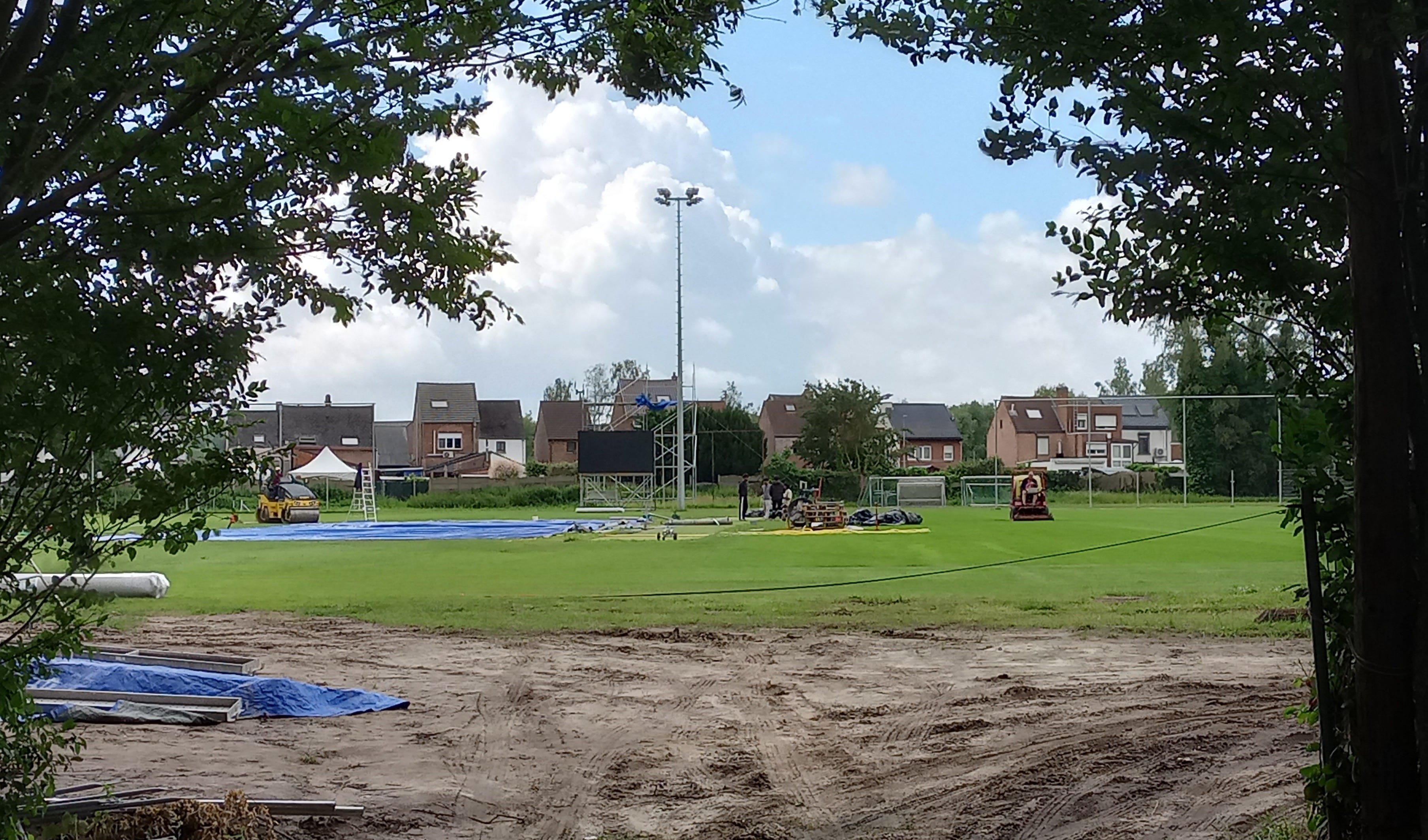
They’ve had their work cut out – given the scale of the event and anticipated crowds, with Destino predicting attendances of 4,000 and up each match-day. Such numbers would be a challenge to accommodate at 12 Stars Hofstade, a club ground with limited access and parking, and without permanent stands, that shares its facilities with local soccer club FC Verbroedering. The site had already seen some prior investment, a new artificial strip being laid between the soccer pitches last year, and has hosted T20 internationals in the form of the Mdina Cup last summer, but the EUT20 is to be played on natural turf. The work on two new turf wickets at Hofstade began only in April, less than ten weeks out from the first ball.
There seemed to be some initial confusion as to whether these wickets were to be traditional turf or hybrid wickets, with the BCF apparently anticipating the latter but their new partners insisting on the former – “It’s not hybrid wickets, it’s proper turf. We were very particular from day one that we wouldn’t want to play on drop-in wickets, we’re creating the wickets there. It’s not a hybrid, not a mixture of astro and regular turf – it’s an original wicket like you could see in England,” Destino’s spokesman clarified in April. “We’ve got the turf and sand everything from the UK. It’s already shipped in, it’s quite expensive for us, but we’ve chosen to do that because we didn’t want to adapt to the facilities which are currently available in Belgium – which is astro – as we didn’t want the international stars to play on astroturf, and we want the local boys to start playing on proper actual turf, so they can get on toward qualifying for a World Cup!”
Needless to say laying and bedding in a new turf wicket in such a short time frame, and in the face or inclement north European weather, is an extremely ambitious undertaking. The state of progress on the wicket has, unsurprisingly, become the focus of concern ahead of the opening day, with reactions ranging from scepticism to incredulity. Pictures of the venue have been conspicuously absent from the constant barrage of social media hype, and indeed the “venue” page of the official EUT20 site current features a rendering of Cricket Namibia’s new facility in Windhoek.
Heavy showers and strong wind over the past week have not helped matters. Speaking on the eve of the event, Ravindran confided that a planned inaugural game on the wicket had to be called off, though he did say that the surface had been bowled on a fair bit, and the bounce seemed true enough. The heavy weather has hindered progress on what was already a tight schedule, not only in the middle but also on temporary facilites being installed around the ground, with work continuing at seemingly a frenzied pace less than 24 hours ahead of the first ball.
Yet the facility forms a key part of the contribution that Destino envisage the venture making to Belgian cricket more broadly. The plan is for the 12 Stars ground to see use throughout the year (outside of the soccer season, presumably) – “we’re not just planning a ten day event, we’ll be having multiple other events through the year. We’ll be having a lot of local league cricket; the franchise teams under the same names will play through the season so we’ll have a lot of local players that will be competing through the year to eventually qualify to be part of the EUT20 which will happen again in the same window next year. We’ll also be having a lot of under-19 trials, and promoting women’s cricket also, all of this is in our long term plan.”
That plan is set to run for at least a decade, the BCF and Destino having inked “a perpetual agreement subject to revision post ten years, and all our contracts with our teams run ten years too. They [the BCF] get a component of the league’s profit share, or a minimum guarantee we give them for holding the licence for the league.” Such agreements are fairly typical for leagues hosted in Associate countries, and compared to the promised investment in facilities the direct financial benefit for the BCF is fairly limited – neither party are willing to name exact numbers, but the figure is understood to be close to €50,000 for the first year.
Yet infrastructure and exposure remain the primary upsides from the hosts’ perspective, as the BCF’s Ravindran explains. “In terms of the facilities they have told us they’ll make some nets, and they are giving us the two hybrid [sic] pitches, which we’ll use for our games too for the national team and our women and juniors … and when you have this sort of facility we can bid [for ICC qualifiers] in upcoming years. We hope that way to get more interest from local governments too, which in time could lead to us getting an indoor facility which is something, given the weather here in Belgium, that is one of our main targets [the nearest such facility for most Belgian cricketers is currently in Rotterdam] and whatever we get financially we will put that back into women’s cricket and juniors.”
In theory then there is little downside for the hosts, though Ravindran nonetheless struck a careful tone, “I’m very cautious even now, till the date it starts I’ll be very cautious … because with most of the franchise leagues we’ve seen the same thing happen again and again. Until the league has really started, I don’t want to say anything, I’d want the first day of play to happen … but so far so good.”
On paper the liabilities for the BCF are very low, and as the sanctioning body their exposure is primarily reputational rather than financial. While a 5-10% share of operating profits may seem a modest and uncertain return, even a guaranteed flat fee of a few tens of thousands of dollars would still represent a significant windfall, constituting a double-digit percentage of annual revenue for a typical Associate board, the majority of whom receive less than $200,000 per annum from the ICC and have few other substantial revenue streams.
Given these financial realities, Associate boards on the continent (as elsewhere) are inherently biddable when it comes to dispensing sanction for leagues. With daylight hours in Europe mapping neatly onto prime-time in India, and more than 30 Associate ICC members to choose from, it’s perhaps surprising that it’s taken so long for more outside investors to venture so confidently into the European market.
Destino are, as noted, not the first to test the waters, but their “explode out of the blocks” approach does appear to be making unprecedented headway. Having sold all five franchises and apparently secured broadcast deals with Sony, Fancode, Premier Sports and Kanitpur TV, the BCF and Destino have already overcome two obstacles that proved insurmountable for the EuroSlam in five attempts, seemingly with little more than networking nous and big-bucks bravado.
Next up of course is the small matter of successfully organising an actual tournament, before ideally delivering a reasonable return on investment for franchise owners over the following years. Come Saturday 12 Stars Hofstade will host a very public test of whether Destino and Cricket Belgium’s breakneck strategy constitutes a practicable model, capable of launching a high-profile franchise league, essentially from scratch, at a hastily-renovated mixed-use venue in an Associate country with a runway of less than a year – or proves, like preceding leagues, to have o’er-leapt itself.
Meanwhile just one week later a very different strategy will be put to the test at the Stockholm suburb of Nosborg, where the first edition of the Nordic Smash will showcase Sweden’s “start small, start local” approach…
… on which more in Part 2
Readers can follow more of Bertus de Jong’s work on his substack @outsidethecircle, his Cricbuzz contributions, as well as his socials: Twitter @BdJcricket, and Bluesky @bdjcricket.bsky.social.