
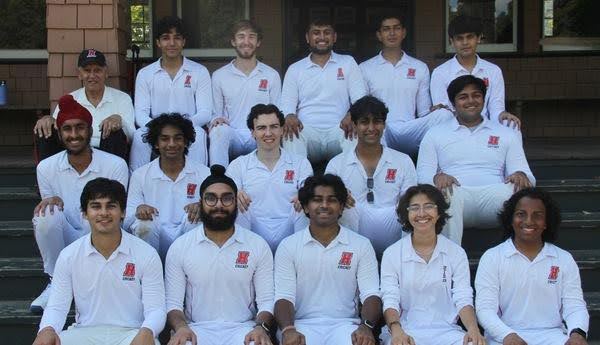
As U.S. college sports undergo seismic change, cricket faces both challenge and opportunity in its quest to gain varsity status and carve out a sustainable future on American campuses.
College sport in the United States is a cultural phenomenon that is deeply embedded within society and laden with tradition, rivalry, pride, and passion. For many Americans, college sport is a way of life.
As the new academic year begins, a small but growing proportion of college students—as well as perhaps a larger cohort of students arriving internationally from mostly South Asian countries—will immerse themselves in one of the lesser-known college sports: cricket. While college cricket in the United States has a long history dating back to the mid-nineteenth century, a more recent trend of institutions offering college cricket is evident. Less than a decade ago, an estimated 70 college cricket teams competed across North America. Today, the United States alone is home to over 110 college cricket clubs.
Despite this growth, college cricket is still a far cry from the apex of U.S. college sport. At the elite level, varsity sports at U.S. colleges and universities are run by athletic departments. These athletic departments, theoretically, act as a separate entity from the academic institution and receive varying levels of institutional support dependent on each school’s strategic priorities. Here, storied universities are represented by international-caliber athletes in televised sporting contests at historic venues with six-figure seating capacities.
While a decoupling of the contested term “student-athlete” is intensifying (more on that later), historically, at least, the goal of varsity college sport has been to promote both academic and athletic excellence. Varsity status unlocks a myriad of resources for competing student-athletes, including access to specialized facilities, academic support services, and, in some cases, athletic scholarships. For many sports—notably (American) football and basketball—varsity college sport is an established step in the talent development pathway and is often a precursor to playing professionally.
College cricket and the NCAA
The pinnacle of varsity college sports has historically been the National Collegiate Athletic Association (NCAA), the preeminent membership-led organization dedicated to the administration of college sport in the United States. The NCAA, through its membership, approves the sports that compete for national championships and currently sponsors 24 sports at the varsity level; 14 of which are played by both men and women, providing organized competition for over half a million ‘student-athletes’.
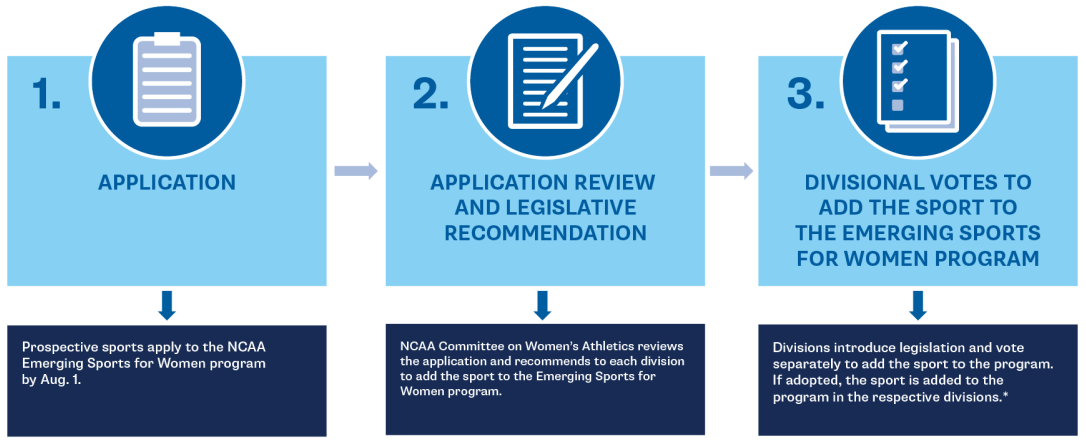
Governing bodies seeking NCAA recognition for their sport face a rigorous process shaped by Title IX, a law from 1972 mandating federally funded institutions provide equal opportunity, regardless of sex. The last men’s sport added was rifle in 1980, while the early 1980s saw the introduction of women’s sports like basketball and soccer. To combat participation disparities, the NCAA launched the Emerging Sports for Women program in 1994 to grow meaningful intercollegiate sport opportunities for female student-athletes. The program requires at least 20 NCAA institutions to offer the sport at the varsity or club level, with 10 institutions either sponsoring or planning to sponsor the sport at the varsity level at the time of application. To achieve championship status, a minimum of 40 institutions must sponsor the sport at the varsity level.
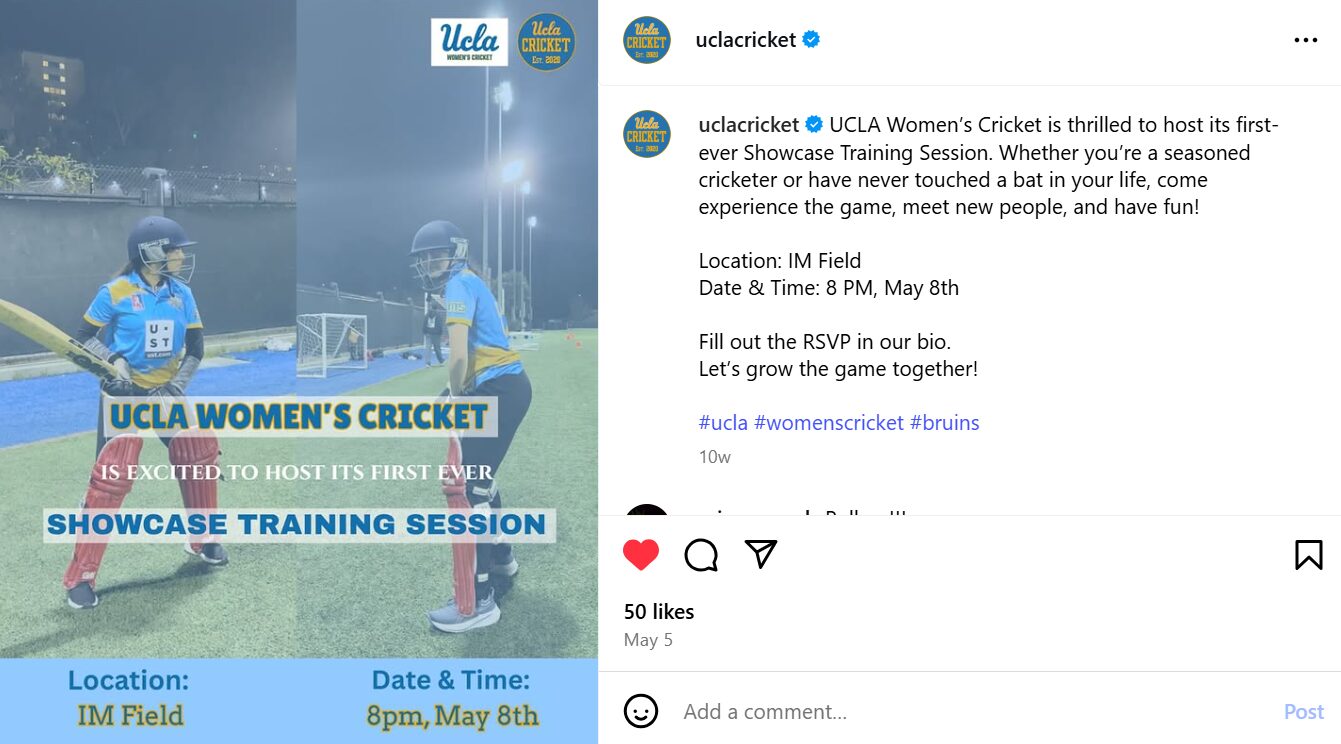
History suggests that cricket’s path to NCAA sponsorship would likely need to be as a women’s sport through the emerging sport program. Herein lies the first problem. A cursory glance at the activity of any of the circa 116 active U.S. college cricket clubs reveals a male-dominated space with little to no women’s-only cricket provided. Looking back, in the late 2010s, the University of South Florida supported a women’s cricket club. More recently, UCLA hosted a women’s cricket showcase. The lack of women’s participation in college cricket arguably mirrors the national picture, where USA Cricket references low interest and participation in cricket among women and girls due to an inadequate domestic structure and a lack of investment.
College cricket and NCAA alternatives
Currently, nine out of every 10 college cricket clubs in the United States exist as student-led activities—either as campus recreation sport clubs or university-registered student organizations. The resulting “by-students-for-students” mantra positions these clubs as discretionary extracurricular activities, which are traditionally fraught with issues of long-term sustainability and under-funding. While college cricket clubs operate almost exclusively at the sub-varsity level, most clubs do disclose performance within their multi-faceted purpose.
In 2025, 75 clubs were involved in intercollegiate competition last academic year. By way of comparison, more colleges are playing intercollegiate club cricket than NCAA college teams competing in either men’s or women’s varsity rifle. Yet, the size and scale of college cricket is some way short of the over 2,000 institutions that sponsor men’s or women’s varsity college basketball of varying levels across the United States.
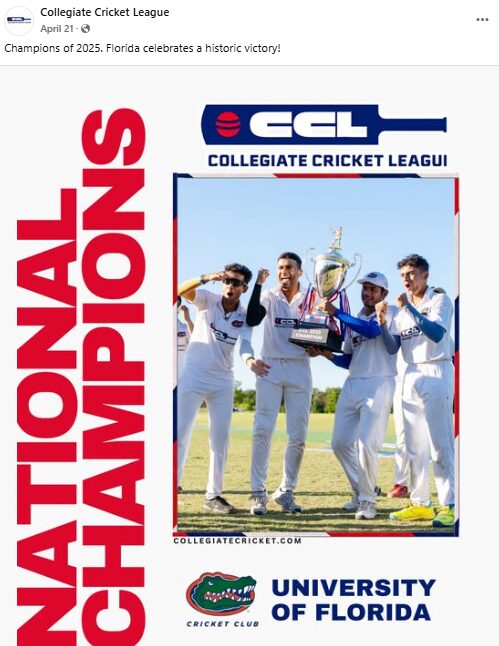
On the field, college cricket clubs competed for three national championships in Spring 2025: the National College Cricket Association National held two separate T20 championships, and the Collegiate Cricket League (CCL) convened an inaugural 10-over championship. The latter is of potential significance to college cricket. Specifically, the CCL is partnered with the Sachin Tendulkar-backed National Cricket League and endorsed by USA Cricket. The CCL’s 10-over tournament is central to the organization’s wider effort to transform college cricket in the United States by encouraging institutions to elevate cricket programs to varsity status.
NCAA approval is not an absolute requirement for a college or university to offer a sport at the varsity level. For example, varsity esports has been added by over 270 colleges and universities over the last decade outside of the purview of the NCAA. While considered a co-ed sport at the college level, esports—like cricket—is primarily dominated by men. Yet, the comparisons between esports and cricket end there. A U.S. District Court ruling in 2023 provided a Title IX exemption for esports, given how the sport does not require athletic ability. Cricket, as a sport more aligned with the traditional view and definition of sport, will likely not benefit from a similar rule.
Perhaps a more appropriate comparison is between cricket and rugby; two sports with core global appeal outside of the United States. Rugby has struggled somewhat to make significant inroads at the varsity level. For instance, college rugby lacks a unified approach across the men’s and women’s games, indicative of how only women’s rugby is on track towards NCAA championship status via the emerging sport program. As a result, the governance of college rugby has been described as fractured, with three organizations competing for control of the sport.
One of the reasons why schools are reluctant to add non-NCAA sports is due to the significant financial backing that accompanies NCAA affiliation. To help bridge this gap, governing bodies do offer grant schemes to incentivize new program expansion. National Collegiate Rugby, for example, offers a 50% discount on both the club and player registration fees for new and emerging college rugby programs. It seems the CCL will likely pursue similar incentives by securing funding to enable schools to offer scholarships and invest in state-of-the-art facilities.
Today, there are 35 varsity men’s rugby programs. That means 35 schools have made the institutional decision to elevate men’s rugby despite a lack of alignment with NCAA governance. Alternatively, only Haverford College appears to offer cricket as one of its 23 varsity college teams.
A sport being promoted to varsity status at the institutional level has been likened to a buyer-seller relationship whereby sport governing bodies (i.e., the sellers) market their product’s features to college sport decision makers (i.e., the buyers). With this, the new sport must be viable for the “buying” institution to justify adding. Cricket clearly has market potential for universities. Think of international student recruitment and international licensing. For the first time in 15 years, India was the top origin for international students in the 2023–24 school year in the United States. But this value proposition has yet to be fully teased out in a compelling way.
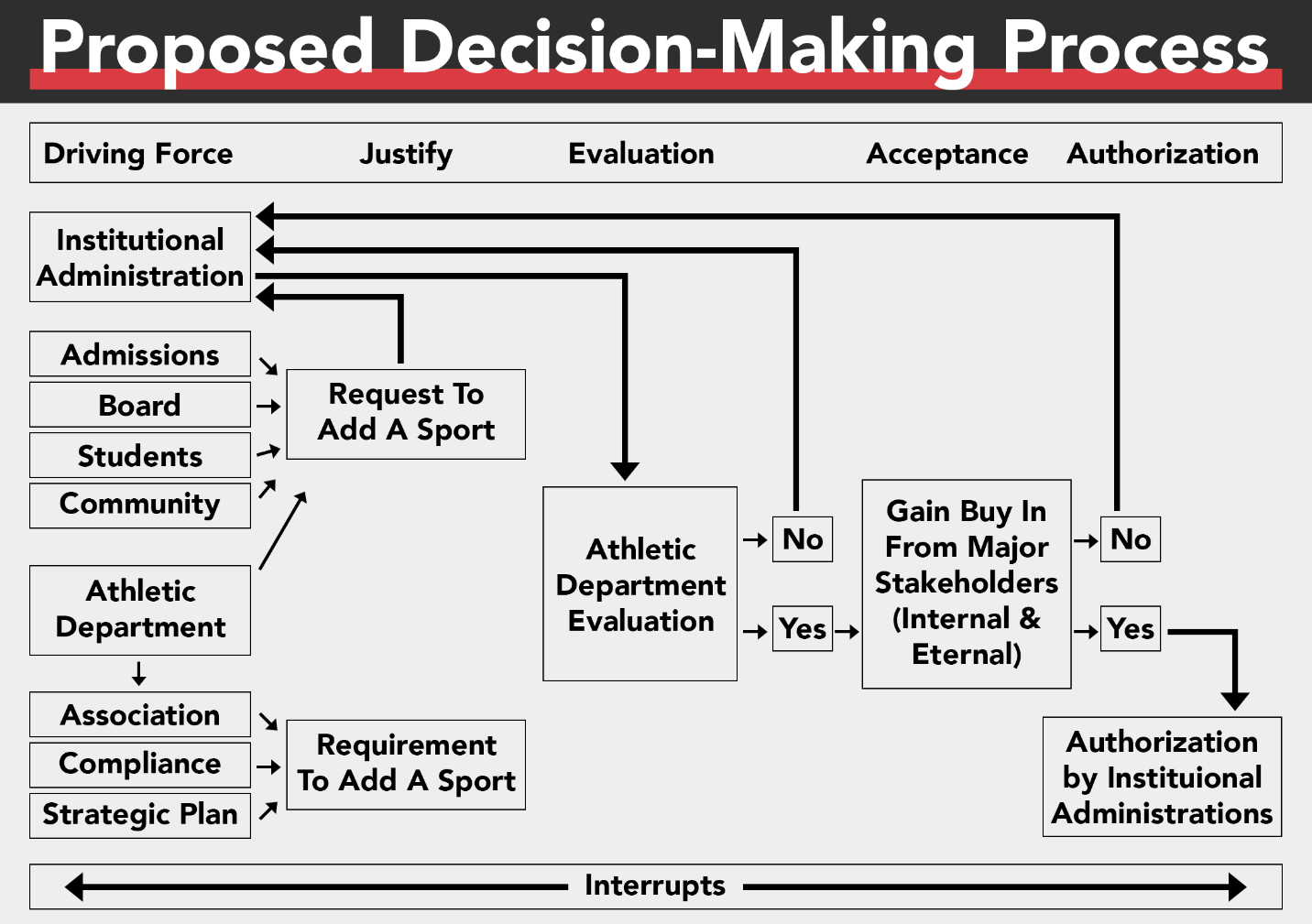
An increase in college cricket’s popularity, combined with an emerging appetite to elevate the game, should be a cause for optimism. As the world’s second most popular sport, many global cricket fans would assume it is simply a matter of when (not how) cricket will reach the pinnacle of U.S. college sport. Still, those charged with developing cricket in this setting—like the CCL—are faced with a strategic conundrum: How can cricket break into the upper echelons of U.S. college sport over the next decade and beyond?
Reimagining elite-level college sport
Today, the college sports landscape in the United States is amid a seismic shift. Approved in June, the House v. NCAA settlement provides the latest major challenge to the amateurism model of college sports. Specifically, student-athletes can now be paid directly by athletic departments up to 22% of revenue, capped at $20.5 million. This settlement is in addition to pre-pandemic changes around Name, Image, and Likeness laws, which enabled student-athletes to receive endorsement deals.
On the prospects of cricket becoming a varsity sport in the next decade, an overwhelming lack of optimism exists among current college sports administrators. In the short term at least, more evidence points to a reduction in NCAA Division I sports. In fact, 41 Division I Olympic sports programs had been cut within one month of the settlement deal, affecting at least 1,000 athletes. With high school athletes commanding financial packages in excess of $10 million over the course of multi-year agreements, athletic administrators are rightly concerned by the prospect of funding existing sports—let alone adding new ones.
However, some commentators propose that post-settlement is an opportune time to add more tuition-paying student-athletes and teams. This would suggest a move towards a greater integration between athletic departments and academic institutions and could promote further investment in established club sport programs. The American Collegiate Hockey Association provides competitive collegiate ice hockey to 461 schools and 13,000 players and offers an alternative to varsity sport for students. This is a larger footprint than the established NCAA ice hockey offerings and has produced several future professional players who have gone on to play in the NHL.

Club hockey teams can act independently of the varsity athletic department and are therefore not subject to the same Title IX constraints. In some instances, club sport teams act almost as a separate entity entirely, raising money through registration fees, selling tickets to games, and raising donations from club alumni.
There has been much speculation about how college sports will be financed moving forward, with several schools already taking on significant private equity investment to meet the growing financial demands of competing at the elite level. There have even been some calls for the potential of a reimagined world of schools selling equity in individual sports programs, to then be run independently as for-profit businesses.
With cricket investment in the United States on the rise, and the historic reliance on alumni donor support within college sport, could cricket offer an alternative model that offers schools unique commercial opportunities? By partnering with select schools and proactively seeking alumni investment into club programs, there is the potential for cricket to create an elite player pathway in the United States that not only can attract skilled cricketers from around the world but also foster domestic player development, while growing awareness of the game by leveraging the passion for U.S. college sports.
Next steps
The future of college sports is uncertain; however, it certainly stands that during a pivotal moment in cricket’s development in the U.S. market, the college space should not be ignored. Now may be the time for cricket to proactively look at establishing itself as a force in college sports.
You’re reading Emerging Cricket — brought to you by a passionate group of volunteers with a vision for cricket to be a truly global sport, and a mission to inspire passion to grow the game.
Be sure to check out our homepage for all the latest news, please subscribe for regular updates, and follow EC on Twitter, Facebook, LinkedIn and YouTube.
Don’t know where to start? Check out our features list, country profiles, and subscribe to our podcast. Support us from US$2 a month — and get exclusive benefits, by becoming an EC Patron.